dermatologyreview LP2.5

Dry, cracked, irritant-damaged hands: market review

Which out of all the hand creams have the formula to survive a full working day of hand-washing? The modeller audited hand creams against 32 peer-reviewed clinical papers.

“Some hand creams are body lotions in a tube. They feel like repair for twenty minutes, and the fifth wash of the day takes them off. Protection that does not survive water does not count.” — the Cosmetic scientist model

Independently reviewed by the cosmetic scientist LLM · No connection to, and no payment from, any manufacturer or brand owner · Evidence audit of 104 products · 32 peer-reviewed papers
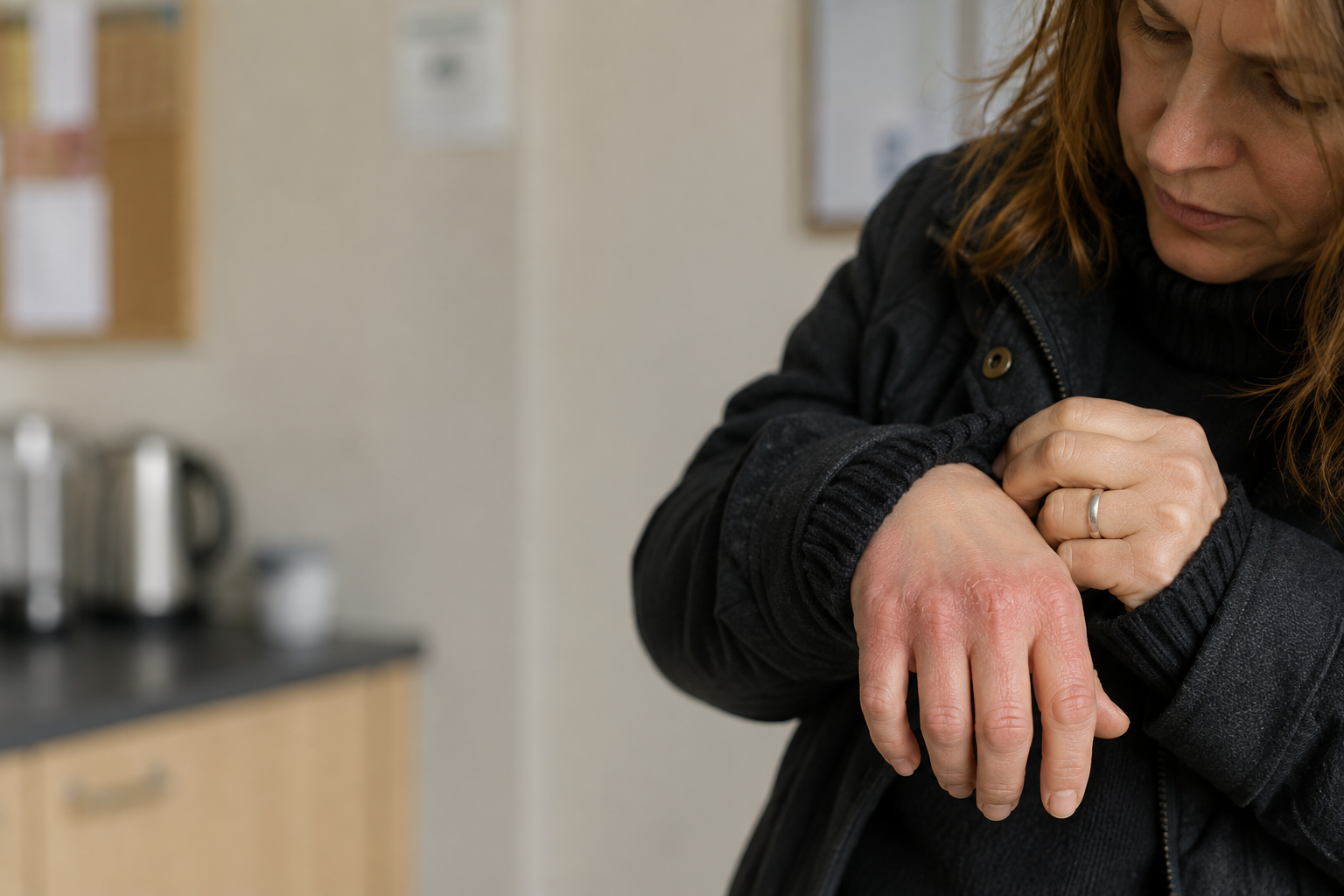
A woman in a black jacket pulling her ribbed sleeve cuff back to expose a dry, red, irritated wrist and back of the hand

What is happening

The jumper catches. You feel it before you see it — the wool snagging on the split across your knuckle, the one that opens every time you make a fist and closes overnight if you are lucky. Your hands have not been right since 2020. You have done what you were told. You keep a tube in your pocket and one by the sink. You have tried the thick one from the pharmacy, the expensive one someone gave you at Christmas, and the tub the man at work swears by. Each of them works. Each of them works until the next wash. So why is it still happening? Here is the answer nobody selling you a hand cream wants to give. This is not dryness in the ordinary sense. It is irritant damage — the commonest occupational skin problem there is, and the reason it concentrates in nurses, carers, hairdressers, cleaners, chefs, mechanics and new parents is simply how many times a day those hands go in water.1,2,3 Above about twenty washes a day the risk climbs steeply,4 and each wash takes a little more lipid out of the skin than the skin can put back in the hours between.5,6 Alcohol gel, contrary to what everyone assumes, is gentler on the barrier than soap and water.7,8 So the arithmetic is against you: the wash–dry–wash cycle strips faster than any cream rebuilds, and a cream that comes off in the first rinse is not in the equation at all. The reveal The cosmetic science modeller set out to find which hand creams on sale are built to survive water. It did something we think is hard to argue with: the cosmetic scientist model researched the ingredient list and declared percentage of 104 hand creams, mapped each ingredient to the published human trials of barrier protection and repair, reviewed verified user reviews from people who wash their hands for a living, and modelled what an independent four-week trial — would be expected to find. Of 104 reviews six finalists ingredients clear the line it set before it started: hydration held at above untreated baseline after the fifth wash of the day.

The hidden-layer model

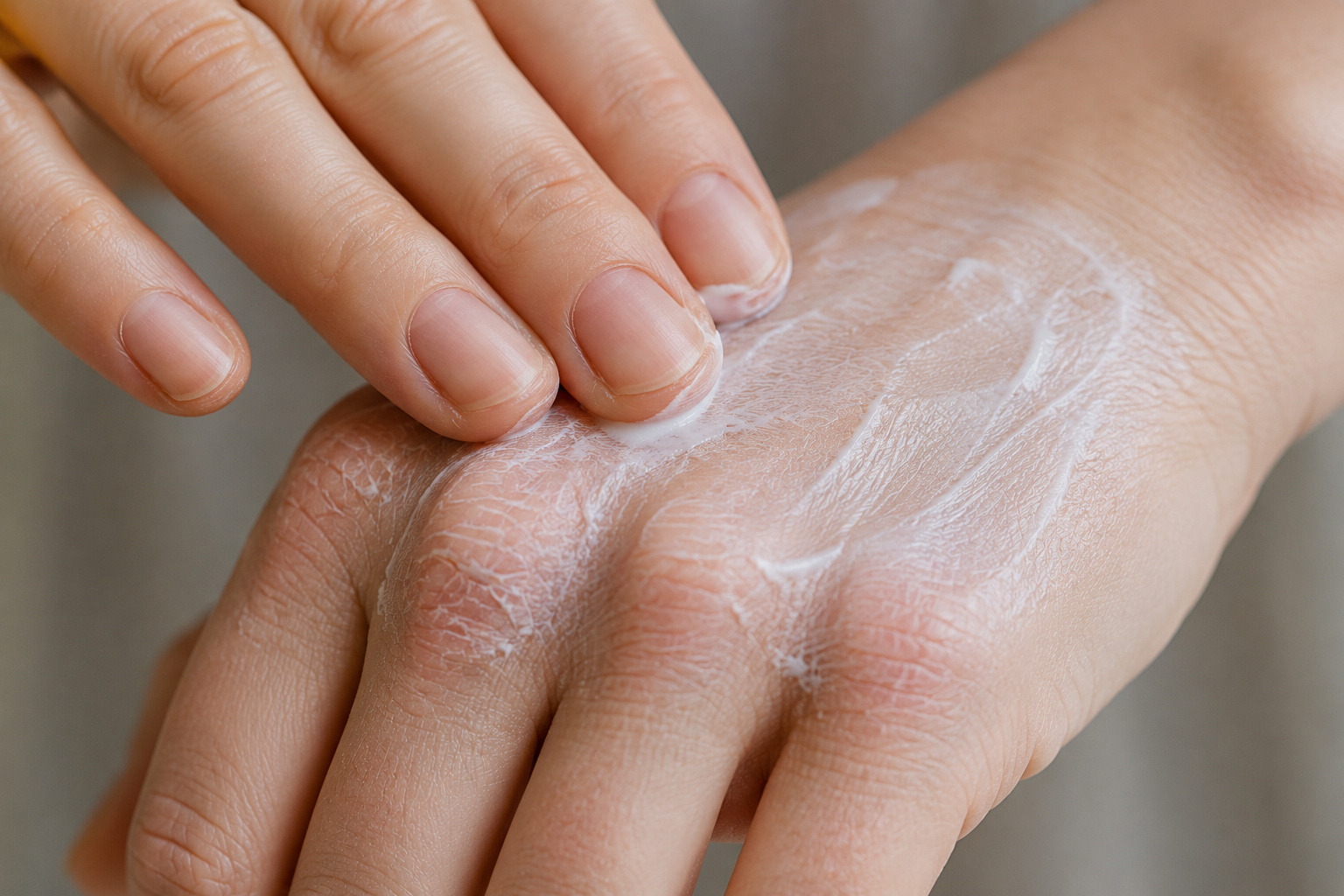
Close-up of a hand with dry, irritated, flaking skin as a dollop of white cream is massaged across the knuckles
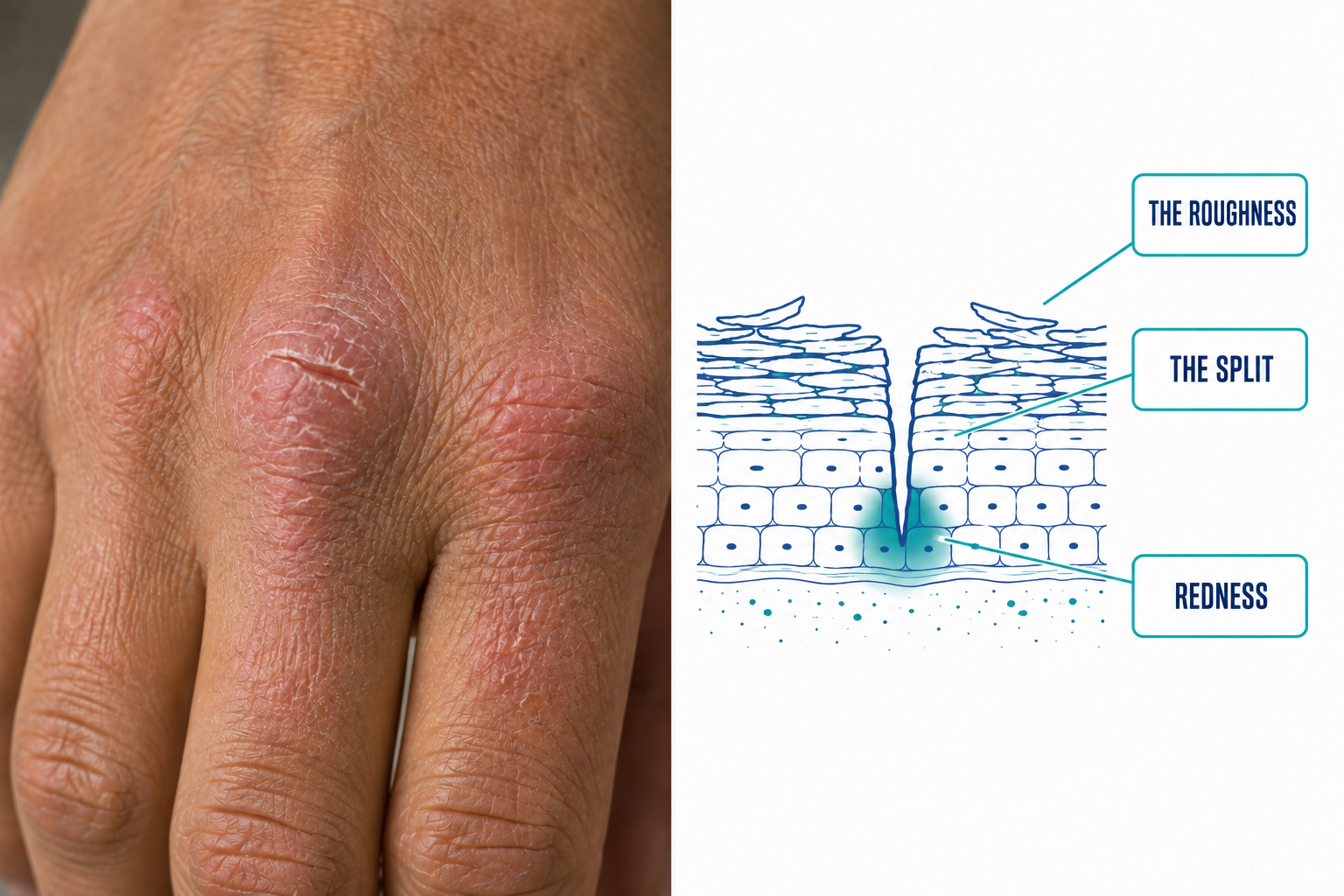
To understand why the cream by the sink is not working, you need to know what damaged hands are made of. Layer one — the surface: what you see Rough, tight, red skin across the backs of the hands; splits at the knuckles and beside the nails; fingertips that have gone smooth and shiny and catch on paper. This is where most hand creams work, and they work quickly: water and glycerin plump the outer layer, an emollient smooths the roughness, and within minutes the hand feels better. The relief is real and it is temporary. If your cream feels wonderful and has gone by the time you have dried your hands twice, it was working here.
Split panel: close-up of a hand with dry, cracked, red knuckles beside a cross-section diagram of the skin barrier showing a deep fissure and inflammation
Layer one — the surface: the roughness, the redness and the split. The layer most hand creams are built for.
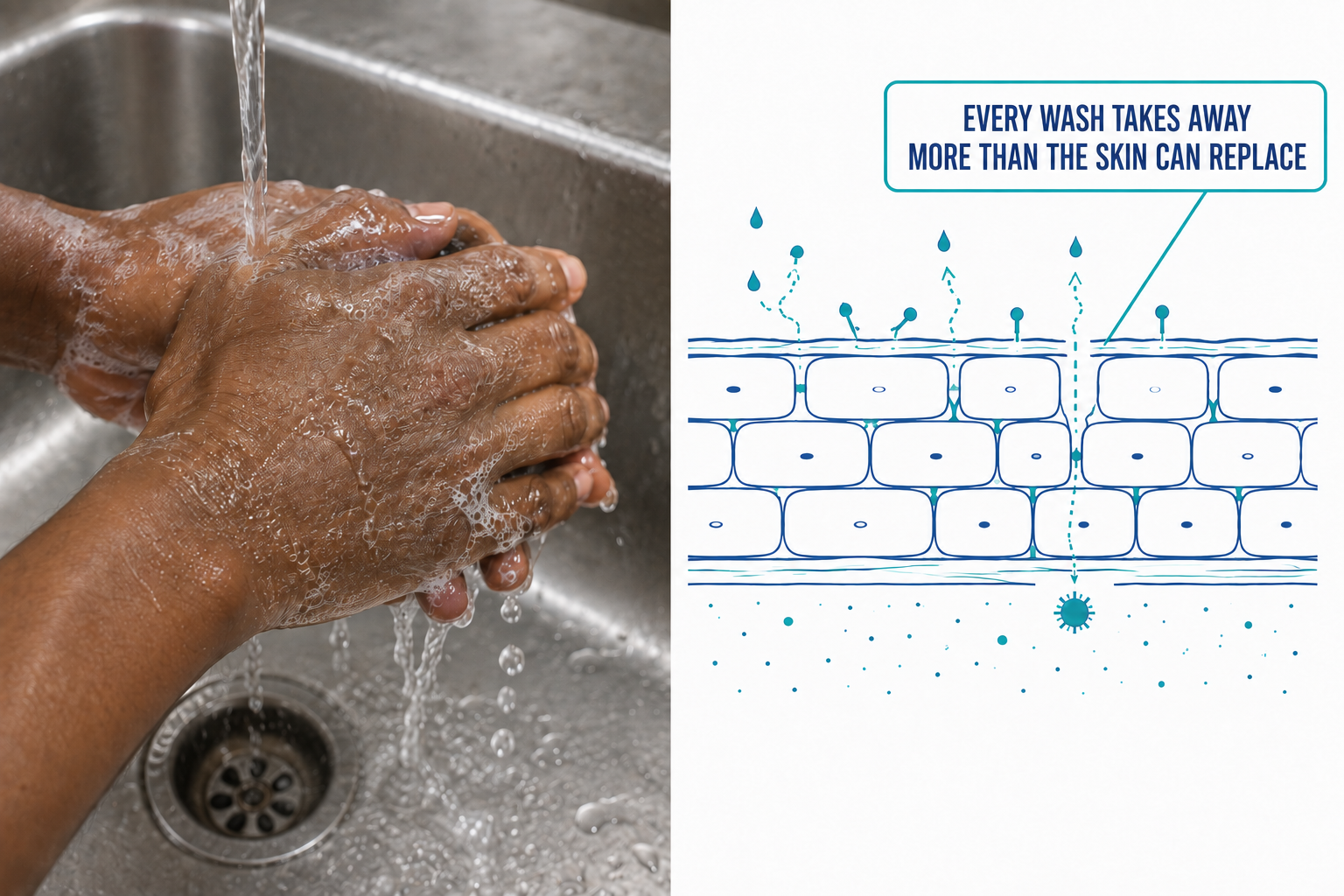
Layer two — the structure: the barrier that has been stripped Underneath, the outer layer of skin is a wall of flat cells held together by a mortar of lipids — ceramides, cholesterol and fatty acids — and hand skin makes less of it than most of the body while being asked to do far more.9 Surfactants in soap dissolve that mortar, bind to the proteins in the cells, and leave the wall leaking: water escapes faster, and the next irritant gets in more easily than the last one did.5,6,10 That is what the meters are measuring in an irritation study — water loss up, hydration down, for hours or days after a single exposure.11 This is the layer some products work on, with lipids and humectants to rebuild the mortar and an occlusive to slow the leak while it happens.12,13 It is also the layer that can genuinely recover, given four weeks and no interruptions — which, if you wash your hands for a living, you do not get.
Split panel: hands lathered under running water beside a cross-section diagram of skin cells with an irritant penetrating the barrier
Layer two — the structure: a lipid barrier stripped by surfactants, leaking water and admitting irritants.
Layer three — the root cause: the cumulative irritant cycle One wash does not damage a hand. The damage is arithmetic. Each exposure removes a little more than the skin replaces before the next one, and the deficit accumulates — which is why irritant hand damage is described in the literature as a cumulative insult, and why it takes weeks of protection rather than days of moisturising to reverse.2,10,14 Two things follow, and they decide this review. The first is that a cream has to be there when the water arrives: applied after the wash and gone by the next one, it protects nothing. What counts is substantivity — a film of lipids, silicones or waxes that resists rinsing and is still on the skin several washes later, which is exactly what the workplace protection trials measure and exactly what some products are engineered for.15,16,17,18 The second is that the routine beats the product: the trials that worked used a cream applied regularly through the working day, and the ones that did not were the ones people stopped using.19,20 A cosmetic cannot stop you washing your hands. It can decide how much of the day’s repair each wash takes away.

Independence statement

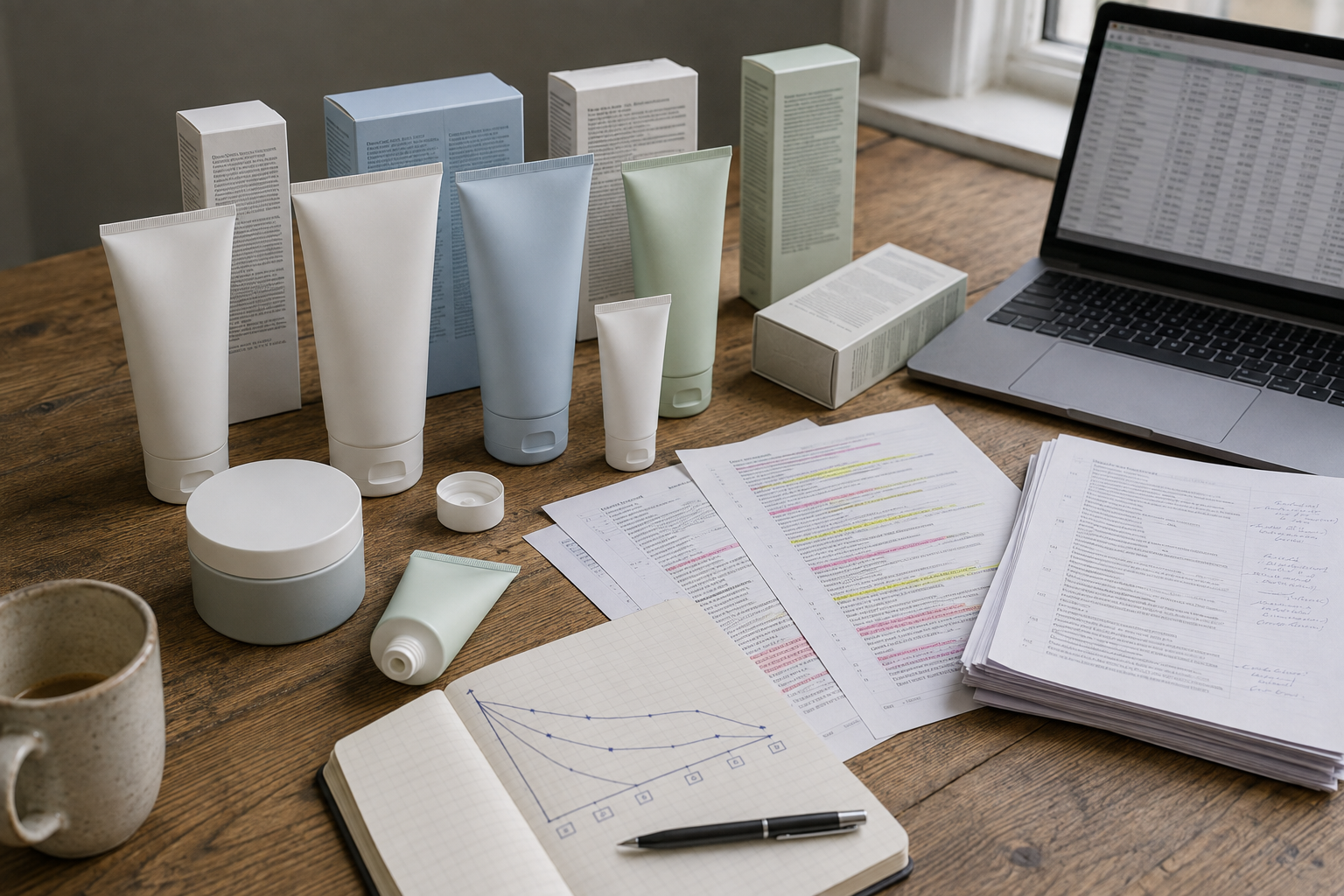
Audit desk: hand-cream tubes, jars and boxes arranged on a wooden table beside printed ingredient lists marked with highlighter, a notebook with a hand-drawn graph and a laptop showing a spreadsheet
Not actual test data or record
This review was carried out independently by a cosmetic scientist LLM. Neither Dermatology Review nor the cosmetic scientist model has any connection to, or has received any payment, product, hospitality or other benefit from, any manufacturer or brand owner named on this page.

Test protocol

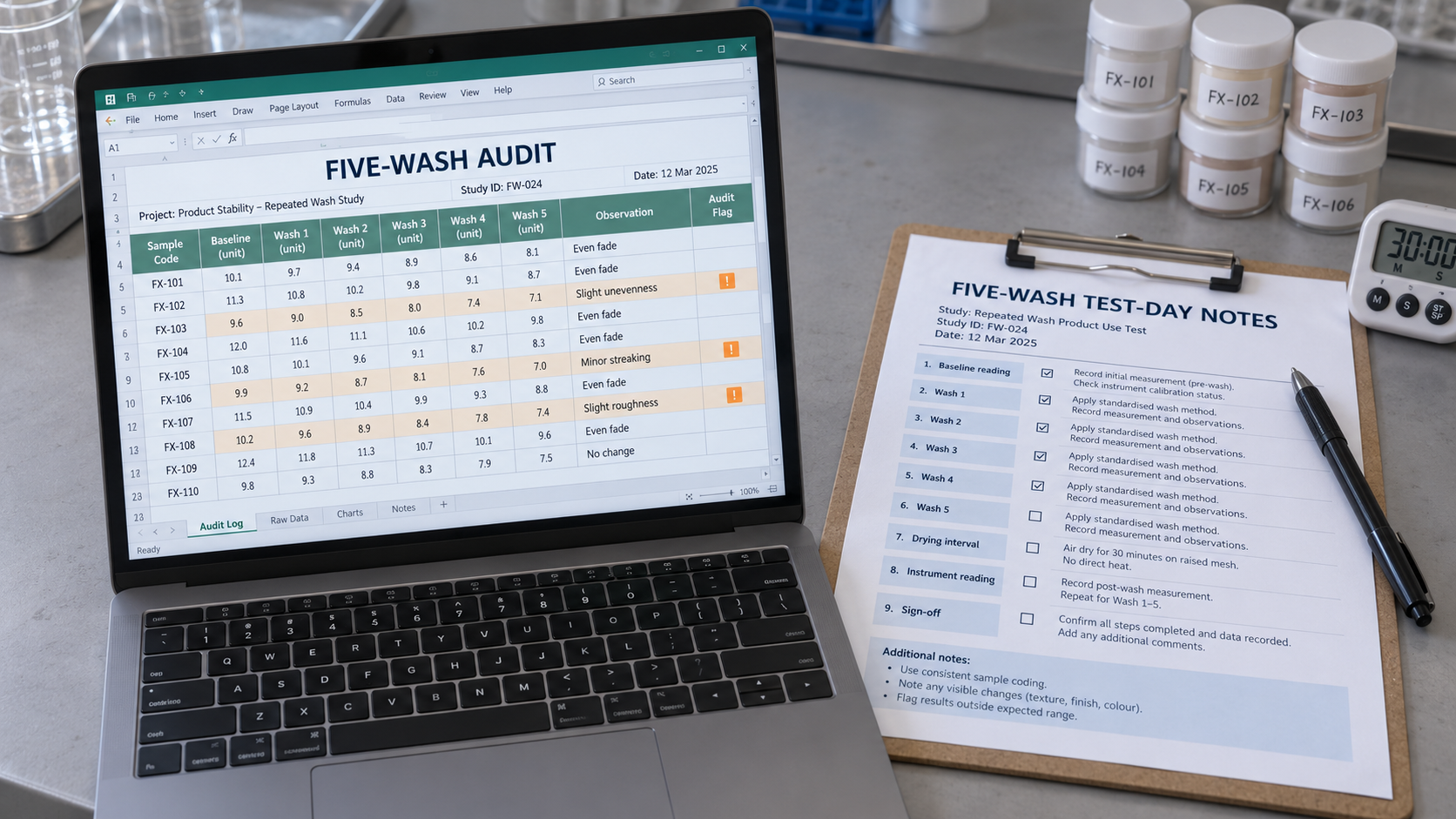
Audit spreadsheet and five-wash test-day notes on screen
Not actual test data or record
Protocol Carried out by an independent cosmetic scientist LLM. We set it out in full, step by step, so that you can judge it — and so that you can see exactly what kind of number each figure on this page is. Published data analysed by independent advanced modelling software. Step 1 — The audit In 2026 a modeller analysed published data for 104 hand creams on sale for dry, chapped, cracked or working hands, from supermarkets, high-street pharmacies, department stores, workwear and trade suppliers, the specialist online retailers and the brands’ own sites. Licensed emollient medicines and medical devices, hand washes and sanitisers were excluded. For each product it recorded the full ingredient list, declared percentage, the price per 100 millilitres, the on-pack claims and directions, and the presence of fragrance, listed fragrance allergens, formaldehyde-releasing preservatives and other known irritants. Where a brand declares no percentage, the position of the ingredient in the list was used to estimate its dose. Step 2 — The evidence map For ingredient classes in the six finalists it identified the published human studies of barrier protection and repair — 32 peer-reviewed papers, listed in the appendix — and extracted the effect sizes: the change in hydration and in water loss through the skin, the resistance of the applied film to washing, the effect on irritant-induced damage, and the time to effect. Where a manufacturer has published its own clinical or consumer study, it is logged as a brand claim and reported as a brand claim. Step 3 — The user record It read the reviews on retailer and brand sites and coded each one for four things: how long the relief lasted, stinging on cracked skin, greasiness or slipperiness at work, and whether the reviewer was still using the product after two months. This is not efficacy evidence. It is tolerance and adherence evidence. What this means for how you read the page Every finding below is a projection built from published evidence, not a measurement. Where it writes “is projected to” or “the evidence points to”, that is precisely what it means.

The key findings

What survives the wash is what counts Every finalist raises hydration within minutes of application. Finding 1 — Protection and repair are two different jobs, and you need both A film that survives washing protects the barrier while it is being attacked; it does not rebuild the mortar that has already gone. Lipids do that — ceramides, cholesterol, petrolatum, the skin’s own moisturising factors — and in the trials the barrier takes weeks to come back, not days.12,13,14 Finding 2 — The tube you will use six times a day Two things from the user record decided this as much as any trial. The first is sting. A formaldehyde-releasing preservative or a strong fragrance on skin that is already split is the difference between a cream applied after every wash and a cream applied at bedtime; the occupational trials that worked were the ones where people kept applying.19,20 The second is grip. Nurses, hairdressers and chefs report abandoning creams that leave hands slippery for ten minutes, which is why the fastest-absorbing product in the review is also one of the most used and why the greasiest is a night-time product for most people.

The active ingredients

This is what the published evidence says about each.
Ingredient classDeclared dose / list positionLayerWhat the evidence supportsRefs
GlycerinUndeclared (Neutrogena’s US sibling declares 40%)One and twoDraws water into the outer layer and holds it; raises hydration and lowers water loss; water-soluble, so it is removed by washing21, 22, 23
Petrolatum and mineral oilUndeclaredTwo and threeOcclusive that both slows water loss and accelerates the barrier’s own repair; the best-evidenced protective ingredient on the shelf12, 24
Silicones (dimethicone, dimethiconol, PEG/PPG dimethicone)Undeclared; the US CeraVe sibling declares 1% dimethiconeThreeWater-resistant film that reduces water loss and is used as the protective layer in barrier creams15, 16, 25
Waxes, starches and film-formers (beeswax, paraffin wax, aluminium starch octenylsuccinate, acrylates/acrylamide copolymer, hectorite)UndeclaredThreeGive the applied layer its substantivity — the property measured in workplace protection studies as resistance to washing15, 16, 17, 18
Ceramides, cholesterol and phytosphingosineUndeclared; after the emulsifiersTwoPhysiological lipid mixtures repair a stripped barrier; hand skin is lipid-poor to begin with9, 13, 26
Urea and the skin’s own moisturising factors (sodium lactate, arginine, sodium PCA, alanine, glycine, carnitine)5% urea declaredTwoHydrating at 5%; NMF systems raise hydration and improve barrier recovery in xerosis27, 28, 29
NiacinamideUndeclaredTwoRaises the skin’s own ceramide synthesis and lowers water loss26
Shea butterUndeclaredTwo and threeFatty-acid-rich emollient and light occlusive24
Sucralfate with copper and zinc sulfateUndeclaredTwoBrand-patented restorative complex; brand-published tolerance study in damaged hands—
Allantoin and panthenolUndeclaredOne and twoSoothing and skin-conditioning; supportive rather than protective30
Preservatives and fragrancePresent or absentFlagFormaldehyde-releasers and fragrance are among the commonest causes of hand contact allergy; they matter most on skin that is already split31, 32
Glycerin — the best twenty minutes in the review Glycerin draws water into the outer layer, keeps the lipids between the cells in the fluid state they need to be in, and at high concentration produces a measurable reservoir that lowers water loss for days after a course of use.21,22,23 It is in all six finalists and it is the reason every one of them feels good immediately. “Glycerin is the reason hand creams sell,” says the cosmetic scientist model. Petrolatum and mineral oil — unfashionable, but the best evidence on the shelf Petrolatum does two things nothing else on this shelf does as well: it forms a film that slows water leaving, and it works into the outer layer where it speeds the barrier’s own recovery.12 Mineral oil does the first without the second, and it is the base of the most water-resistant formula in the review. Silicones, waxes and starches — the film that survives the tap Dimethicone and dimethiconol leave a water-repellent film; beeswax, paraffin wax and modified starches give it body; acrylate copolymers and hectorite hold it together.15,16 These are the ingredients that industrial barrier creams are built from, and the workplace studies of protective creams — which have found real but modest benefit, and are clear that a cream is no substitute for gloves and fewer washes — are studies of exactly this kind of formula.17,18 Ceramides, cholesterol and the skin’s own moisturising factors — the rebuild Hand skin has fewer sebaceous glands and a thinner lipid supply than most of the body,9 and a stripped barrier does not come back in a day. Physiological lipids — the three ceramides with cholesterol and phytosphingosine — restore the mortar between the cells;13,26 urea at five per cent, sodium lactate, arginine, sodium PCA and the amino acids are the substances the skin itself uses to hold water, and the trials of NMF-based creams show hydration and barrier recovery in dry, damaged skin.27,28,29

Final Notes

If you have read this far, your hands have probably been sore since 2020, and you have probably been told, in one way or another, that the problem is you — moisturise more, wash less, wear the gloves. It is not. The problem is many creams built for skin that gets wet once a day. You now know the three layers, you know what substantivity means, and you know which is still on your hands at wash five. That is more than most people have when they stand in the aisle. Use it. Whatever you choose, apply it after every wash rather than only at bedtime, keep a tube where the sink is, and give it four weeks.
Jenny Kang, Freelance Writer, Dermatology Review
Jenny Kang, Freelance Writer

Reference appendix

References — we go further than most cosmetic reviews and give you the published research the lab study model used on the ingredient combinations, and the published studies behind the top-ranked combination, so you can do your own research.

No.ReferenceSupports
1Diepgen TL, Coenraads PJ. The epidemiology of occupational contact dermatitis. Int Arch Occup Environ Health 1999; 72(8): 496–506.
2Nicholson PJ, Llewellyn D, English JS. Evidence-based guidelines for the prevention, identification and management of occupational contact dermatitis and urticaria. Contact Dermatitis 2010; 63(4): 177–186.
3Behroozy A, Keegel TG. Wet-work exposure: a main risk factor for occupational hand dermatitis. Saf Health Work 2014; 5(4): 175–180.
4Jungbauer FH, Lensen GJ, Groothoff JW, Coenraads PJ. Exposure of the hands to wet work in nurses. Contact Dermatitis 2004; 50(4): 172–178.
5Tupker RA, Willis C, Berardesca E, et al. Guidelines on sodium lauryl sulphate (SLS) exposure tests. Contact Dermatitis 1997; 37(2): 53–69.
6Fartasch M. Ultrastructure of the epidermal barrier after irritation. Microsc Res Tech 1997; 37(3): 193–199.
7Pedersen LK, Held E, Johansen JD, Agner T. Less skin irritation from alcohol-based disinfectant than from detergent used for hand disinfection. Br J Dermatol 2005; 153(6): 1142–1146.
8Löffler H, Kampf G, Schmermund D, Maibach HI. How irritant is alcohol? Br J Dermatol 2007; 157(1): 74–81.
9Kikuchi K, Kobayashi H, Le Fur I, Tschachler E, Tagami H. The winter season affects more severely the facial skin than the forearm skin: comparative biophysical studies conducted in the same Japanese females in later summer and winter. Exog Dermatol 2002; 1(1): 32–38.
10Malten KE. Thoughts on irritant contact dermatitis. Contact Dermatitis 1981; 7(5): 238–247.
11Fluhr JW, Feingold KR, Elias PM. Transepidermal water loss reflects permeability barrier status: validation in human and rodent in vivo and ex vivo models. Exp Dermatol 2006; 15(7): 483–492.
12Ghadially R, Halkier-Sorensen L, Elias PM. Effects of petrolatum on stratum corneum structure and function. J Am Acad Dermatol 1992; 26(3 Pt 2): 387–396.
13Man MQ, Feingold KR, Thornfeldt CR, Elias PM. Optimization of physiological lipid mixtures for barrier repair. J Invest Dermatol 1996; 106(5): 1096–1101.
14Held E, Agner T. Effect of long-term use of moisturizer on skin hydration, barrier function and susceptibility to irritants. Acta Derm Venereol 1999; 79(1): 49–51.
15Frosch PJ, Kurte A, Pilz B. Efficacy of skin barrier creams (III): the repetitive irritation test (RIT) in humans. Contact Dermatitis 1993; 29(3): 113–118.
16Frosch PJ, Kurte A. Efficacy of skin barrier creams (IV): the repetitive irritation test (RIT) with a set of 4 standard irritants. Contact Dermatitis 1994; 31(3): 161–168.
17Kütting B, Baumeister T, Weistenhöfer W, Pfahlberg A, Uter W, Drexler H. Effectiveness of skin protection measures in prevention of occupational hand eczema: results of a prospective randomized controlled trial over a follow-up period of 1 year. Br J Dermatol 2010; 162(2): 362–370.
18Bauer A, Rönsch H, Elsner P, et al. Interventions for preventing occupational irritant hand dermatitis. Cochrane Database Syst Rev 2018; 4: CD004414.
19Held E, Wolff C, Gyntelberg F, Agner T. Prevention of work-related skin problems in student auxiliary nurses: an intervention study. Contact Dermatitis 2001; 44(5): 297–303.
20Løkkevik E, Skovlund E, Reitan JB, Hannisdal E, Tanum G. Skin treatment with bepanthen cream versus no cream during radiotherapy. Acta Oncol 1996; 35(8): 1021–1026.
21Fluhr JW, Darlenski R, Surber C. Glycerol and the skin: holistic approach to its origin and functions. Br J Dermatol 2008; 159(1): 23–34.
22Lodén M, Wessman C. The influence of a cream containing 20% glycerin and its vehicle on skin barrier properties. Int J Cosmet Sci 2001; 23(2): 115–119.
23Atrux-Tallau N, Romagny C, Padois K, et al. Effects of glycerol on human skin damaged by acute sodium lauryl sulphate treatment. Arch Dermatol Res 2010; 302(6): 435–441.
24Lodén M. Role of topical emollients and moisturizers in the treatment of dry skin barrier disorders. Am J Clin Dermatol 2003; 4(11): 771–788.
25Nair B. Final report on the safety assessment of stearoxy dimethicone, dimethicone, methicone and related silicones. Int J Toxicol 2003; 22(Suppl 2): 11–35.
26Tanno O, Ota Y, Kitamura N, Katsube T, Inoue S. Nicotinamide increases biosynthesis of ceramides as well as other stratum corneum lipids to improve the epidermal permeability barrier. Br J Dermatol 2000; 143(3): 524–531.
27Celleno L. Topical urea in skincare: a review. Dermatol Ther 2018; 31(6): e12690.
28Lodén M. Urea-containing moisturizers influence barrier properties of normal skin. Arch Dermatol Res 1996; 288(2): 103–107.
29Weber TM, Kausch M, Rippke F, Schoelermann AM, Filbry AW. Treatment of xerosis with a topical formulation containing glyceryl glucoside, natural moisturizing factors, and ceramide. J Clin Aesthet Dermatol 2012; 5(8): 29–39.
30Proksch E, de Bony R, Trapp S, Boudon S. Topical use of dexpanthenol: a 70th anniversary article. J Dermatolog Treat 2017; 28(8): 766–773.
31de Groot AC, White IR, Flyvholm MA, Lensen G, Coenraads PJ. Formaldehyde-releasers in cosmetics: relationship to formaldehyde contact allergy. Contact Dermatitis 2010; 62(1): 2–17.
32de Groot AC. Fragrances: contact allergy and other adverse effects. Dermatitis 2020; 31(1): 13–35.

© 2026 Dermatology Review · SN: DR-2026-001

Dermatology Review

Health & Beauty Reviews

© 2026 Dermatology Review · SN: DR-2026-001

© Dermatology Review 2026. All brand names, product names, logos and trademarks appearing on this page remain the property of their respective owners and are used solely to identify the products under review. No endorsement of Dermatology Review by any brand, and no affiliation with any brand, is implied.

Disclaimer and Limitation of Liability

1. No medical or professional advice. Nothing on this website constitutes medical, dermatological, pharmaceutical or other professional advice, nor a diagnosis or recommendation of treatment for any skin condition. Skin conditions vary between individuals. You should consult a doctor, dermatologist or pharmacist before using any product, particularly if you have a diagnosed condition, are pregnant or breastfeeding, have known allergies or sensitivities, or are using prescribed medication. Never disregard or delay seeking professional advice because of something you have read on this website.

2. Accuracy and completeness. We make reasonable efforts to keep content current and to state our sources. However, ingredient lists, formulations, prices, availability and brand claims change without notice, and published research may be revised or superseded. We give no warranty, express or implied, that any content is accurate, complete, current or free from error or omission. Content may have been drawn from third-party sources that we do not control and cannot independently verify.

3. Opinion and fair comment. Reviews, rankings and comparative statements on this website are expressions of the honest opinion of the cosmetic scientist model, based on the facts and methodology stated on each page. They are not statements of fact about the quality, safety or efficacy of any product, and are not intended to disparage any brand, manufacturer, retailer or individual. Where a product ranks below others, this reflects the output of the stated methodology and not any allegation that the product is defective, unsafe, mis-sold or unlawful. Any brand that considers a statement inaccurate may contact us.

4. Third-party content and links. This website may contain links to, or reproduce claims from, third-party websites, publications and retailers. We do not endorse, control or accept responsibility for the content, accuracy or availability of any third-party material, nor for any products purchased through third-party links.

5. Nature of the content. All reviews, rankings, scores, figures, category analyses and some images published on Dermatology Review are generated by an artificial intelligence large language model (the “cosmetic scientist/science model”) and represent the output and opinion of that model only. The model is commissioned by an independent third party. Dermatology Review has no control over the model. The model forms its opinion by applying a fixed, published methodology to publicly available information, namely published ingredient lists (INCI), peer-reviewed trial data on individual ingredients, brand-published claims and coded consumer reviews. The content does not represent the views, findings, recommendations or opinions of Dermatology Review, its owners, editors or any named individual. Dermatology Review’s role is limited to making the model’s output publicly available for general information purposes. No product featured on this website has been laboratory-tested, clinically tested, handled or used by the publication or the model. All performance figures, scores, percentages and rankings are modelled projections derived from the stated methodology. They are not measurements, test results, statements of fact or guarantees of how any product will perform on any individual, and no person should rely on them as such.

6. Limitation of liability. To the fullest extent permitted by law, Dermatology Review, its owners, directors, employees, contributors and affiliates exclude all liability for any loss, damage, cost or expense of any kind, whether direct, indirect, consequential or otherwise, arising out of or in connection with the use of this website or reliance on any content published on it, including without limitation any inaccuracy, error or omission, any decision to purchase or use any product, any adverse skin reaction, and any loss of profit, revenue, business or goodwill suffered by any brand, manufacturer or retailer. Nothing in this disclaimer excludes or limits liability that cannot lawfully be excluded or limited.

7. Indemnity. By using this website you agree that you do so at your own risk and that you will not bring any claim for compensation against the publisher or its owners in respect of any matter for which liability has been excluded above.

8. Changes. We may amend this disclaimer at any time. Continued use of the website after any change constitutes acceptance of the amended terms.