dermatologyreview LP2.3

Keratosis pilaris (‘chicken skin’): market review

Which ‘chicken skin’ lotions have the formula to smooth the bumps. The modeller audited body treatments against 34 peer-reviewed clinical papers.

“Most ‘chicken skin’ products are working on the bump you can feel. The evidence says the bump is a keratin plug sealed into a follicle that inflames whenever it is disturbed — Cosmetic scientist model

Independently reviewed by the cosmetic scientist LLM · No connection to, and no payment from, any manufacturer or brand owner · Evidence audit of 118 products · 34 peer-reviewed papers
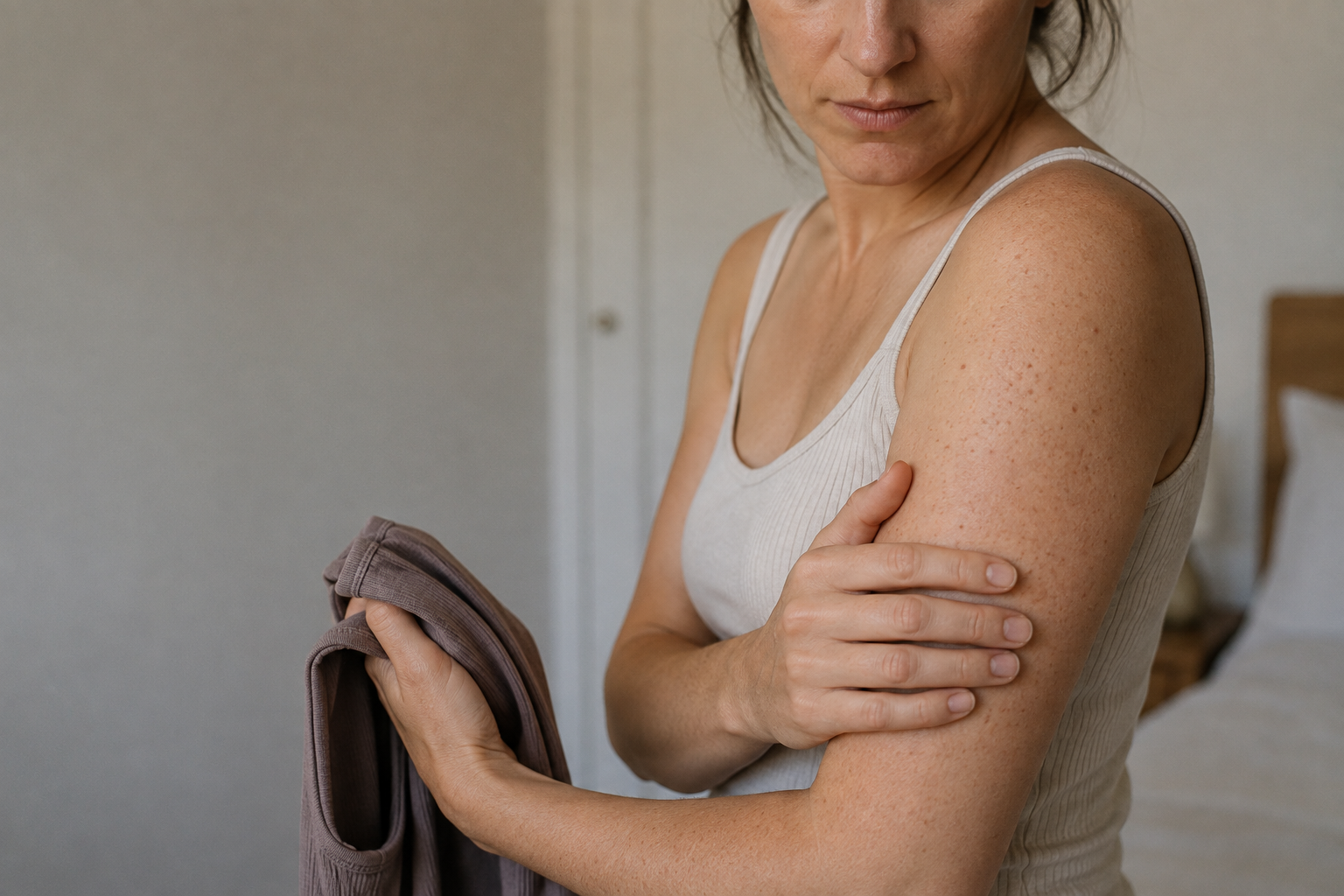
A woman in a beige tank top running her hand over the small red bumps on her upper arm
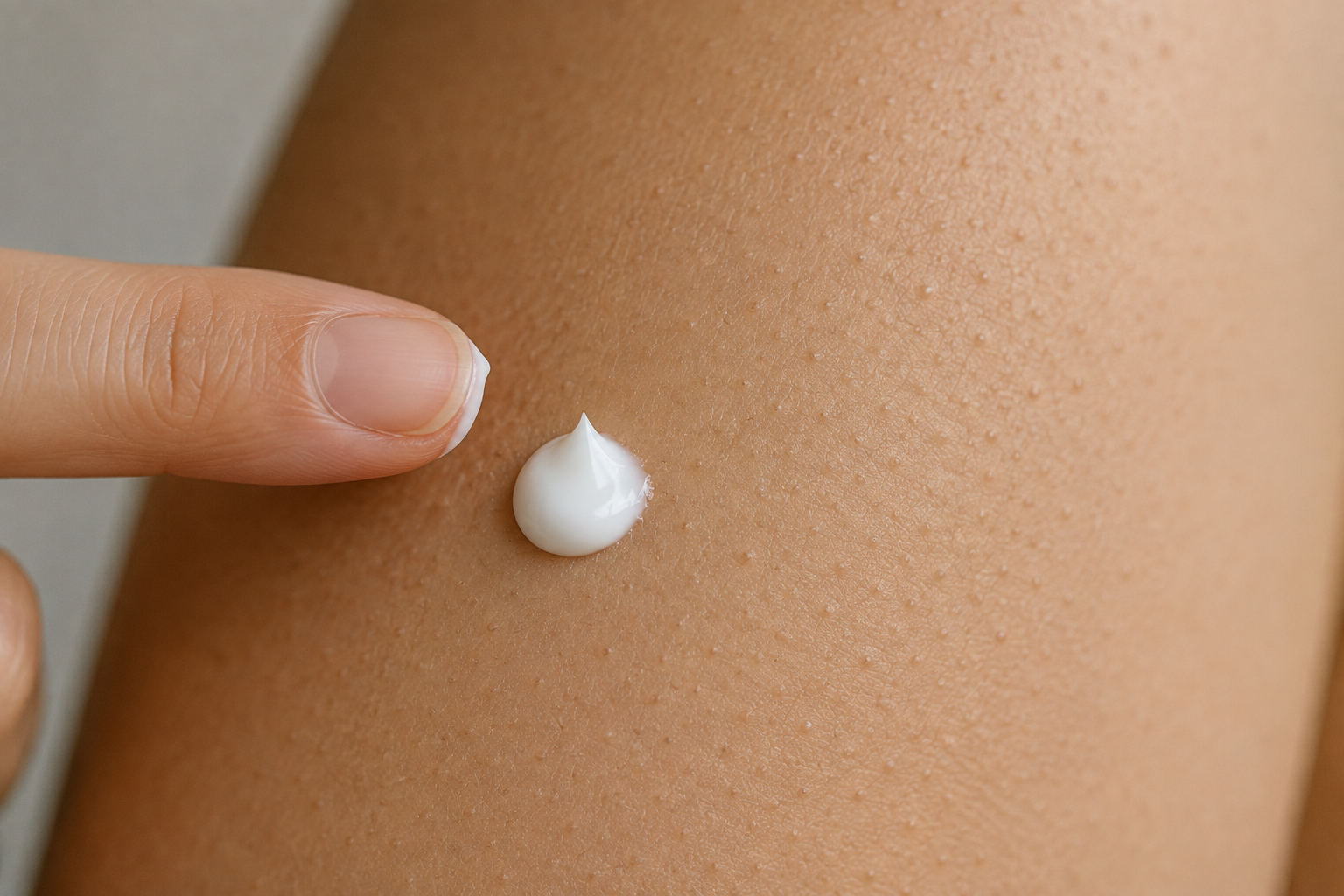
Close-up of a fingertip applying a dollop of white cream to bumpy, textured skin on an arm
You run a hand over your upper arm and you feel it before you see it: sandpaper. Hundreds of tiny bumps, each with its own pink halo, from the shoulder to the elbow and, on a bad month, down the thighs. You have not worn a sleeveless top in years. You have done what you were told. You bought the scrub with the grit in it, and it made your arms redder. You bought the lotion with the acid in it and it stung. You bought the one with urea on the front because the pharmacist said urea, and it moisturised, and the bumps stayed exactly where they were. There are four tubs in the bathroom and you still put the cardigan on. So why is it still there? Here is the answer nobody selling you a scrub wants to give.“Chicken skin” — keratosis pilaris — is not dirt and it is not dead skin you have failed to remove. It is one of the commonest things a human body does: somewhere between a third and half of adults have it, and most teenagers.1,2 Each bump is a plug of keratin, the protein hair and skin are made of, sealed into the mouth of a hair follicle that makes too much of it — and the follicle inflames whenever it is disturbed.3,4 Under the microscope there is often a coiled hair trapped underneath.5 It is a keratin problem, not a hygiene problem. Nothing you scrub off the top changes what the follicle does next, and anything abrasive tells it to do it again. The reveal The cosmetic science modeller set out to find which body treatments do something about the plug rather than the surface. It did something we think is hard to argue with: the cosmetic scientist model logged the ingredient list and declared percentage of 118 leave-on, mapped each active to the published human trials at that concentration, reviewed verified user reviews for what actually happens by week eight, and modelled what an independent eight-week trial of each of seven finalists would be expected to find. Nobody paid us to do it, and no brand saw the results before you. Out of 118 reviews 6 finalists ingredients clear the line it set before it started: a reduction in bump count with no rise in redness.

The hidden-layer model

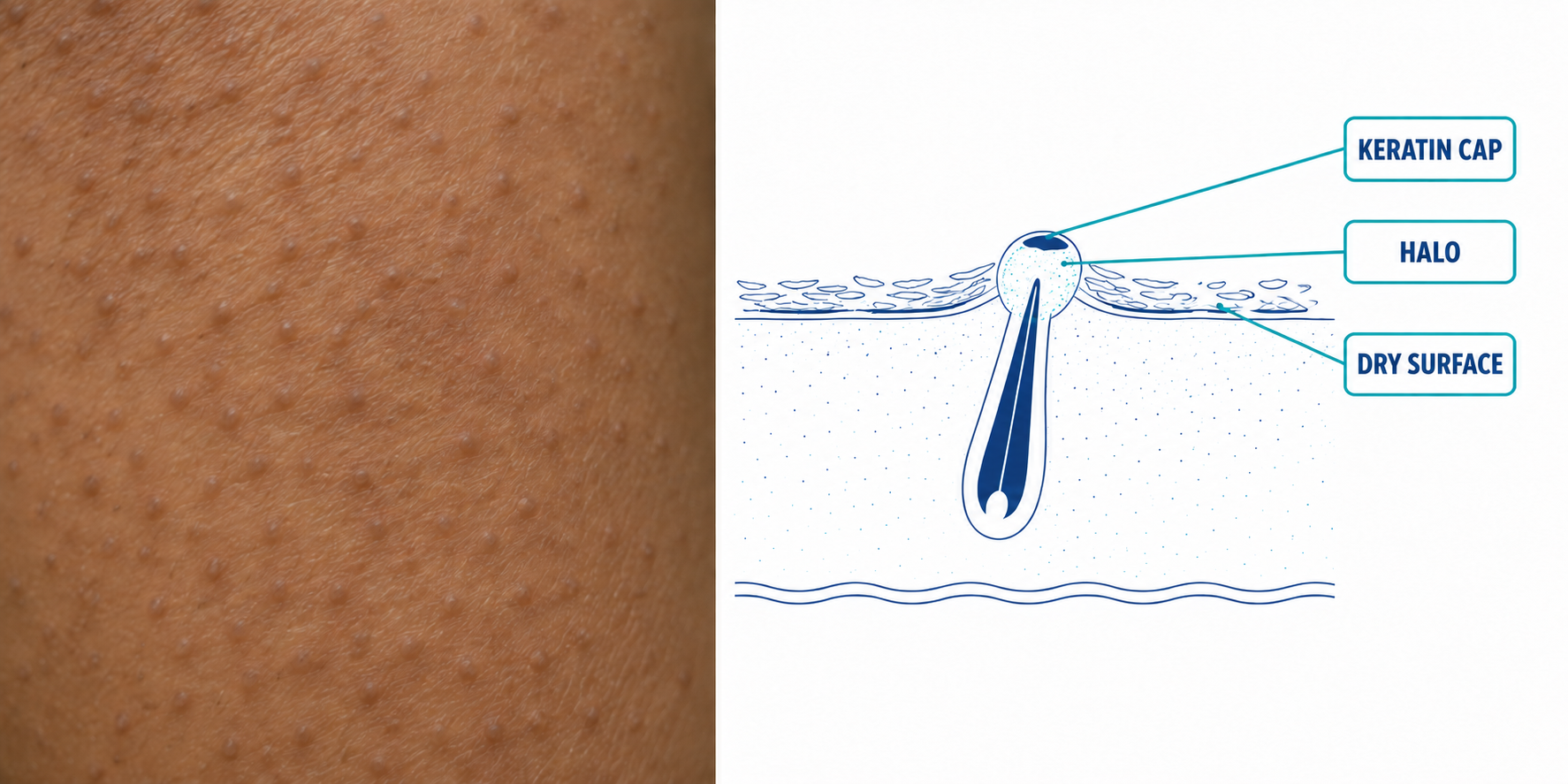
To understand why the scrub felt like it worked and the bumps came back, you need to know what a bump is made of. There are three layers. Layer one — the surface: what you feel The sandpaper texture, the tiny raised cap on each follicle, the pink or red-brown halo around it, and the dry, dull skin in between. This is where scrubs, gloves, dry brushes and grit work, and it is where most people start: they take the caps off, the arm feels smooth in the shower, and for two days it looks better. But the cap is the top of a plug, and the plug is still in the follicle. Within a week it has grown back, and the skin around it — rubbed, stripped and reddened — is drier and angrier than it was.
Split panel: close-up of keratosis pilaris bumps on light-brown skin beside a cross-section diagram of a single plugged follicle with callouts to the keratin cap, the halo and the dry surface
Layer one — the surface: the bump you can feel and the halo around it.
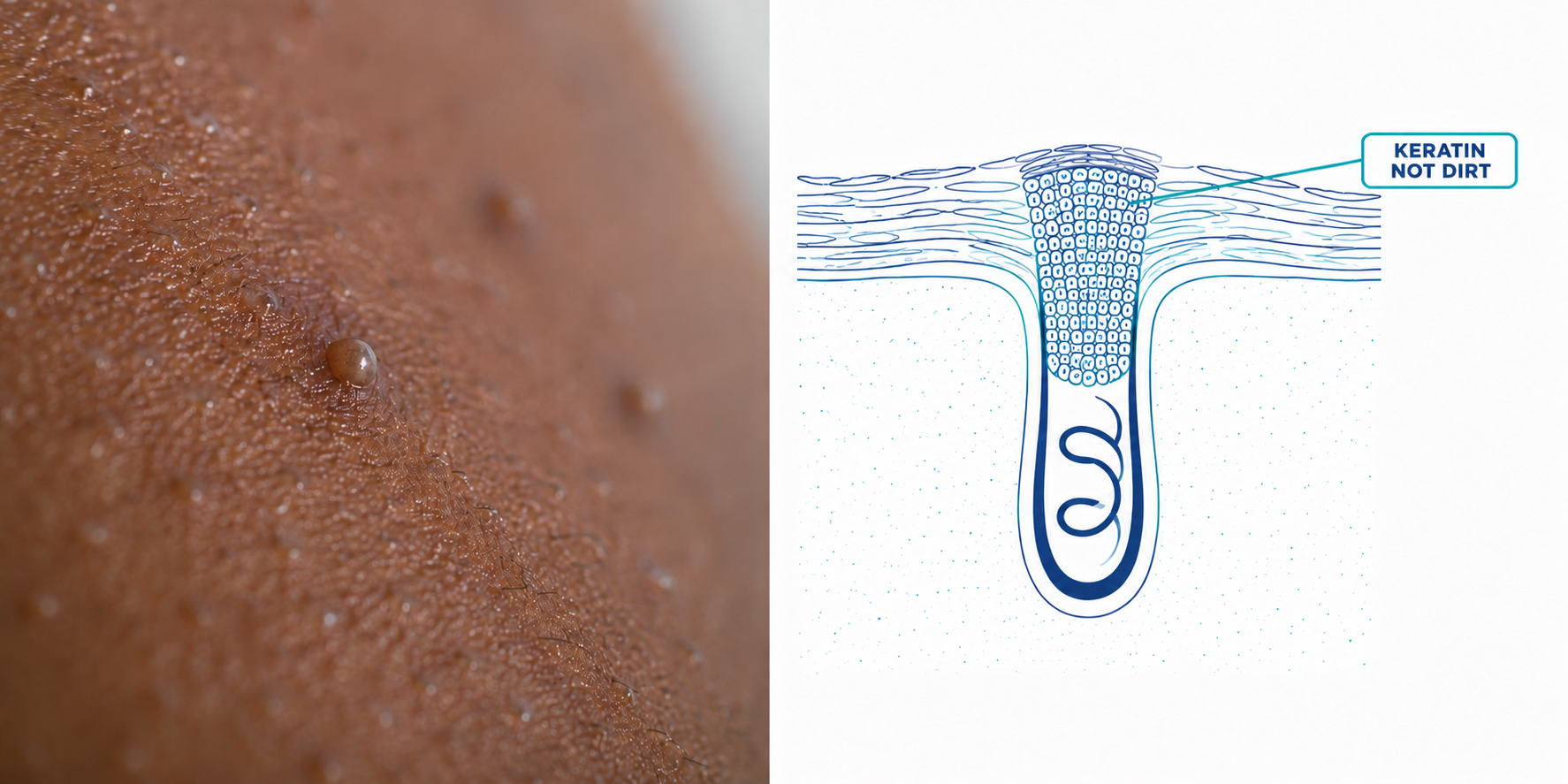
Layer two — the structure: what is in the follicle Below the cap, the mouth of the follicle is packed with keratin. The cells that line it have stuck together instead of shedding, the plug they form holds the hair inside, and the skin around the follicle has thickened and dried into a stratum corneum that is tightly bound to let go of itself.3,4 This is the layer products work on: lactic acid and ammonium lactate loosen the bonds between the cells so the plug releases;6,10,12 urea, at ten per cent and above, does the same and holds water in the skin around it;16,17,34 salicylic acid, because it dissolves in oil, can follow the sebum into the follicle mouth rather than sitting on top.20 In the one randomised trial that measured it, twelve weeks of a ten per cent lactic acid cream reduced the bumps by two-thirds.6
Split panel: close-up of bumpy skin on a dark complexion beside a cross-section diagram of a hair follicle with a callout to the keratin plug labelled keratin not dirt
Layer two — inside the follicle: a keratin plug, and often a trapped hair, inside skin that has thickened around it.
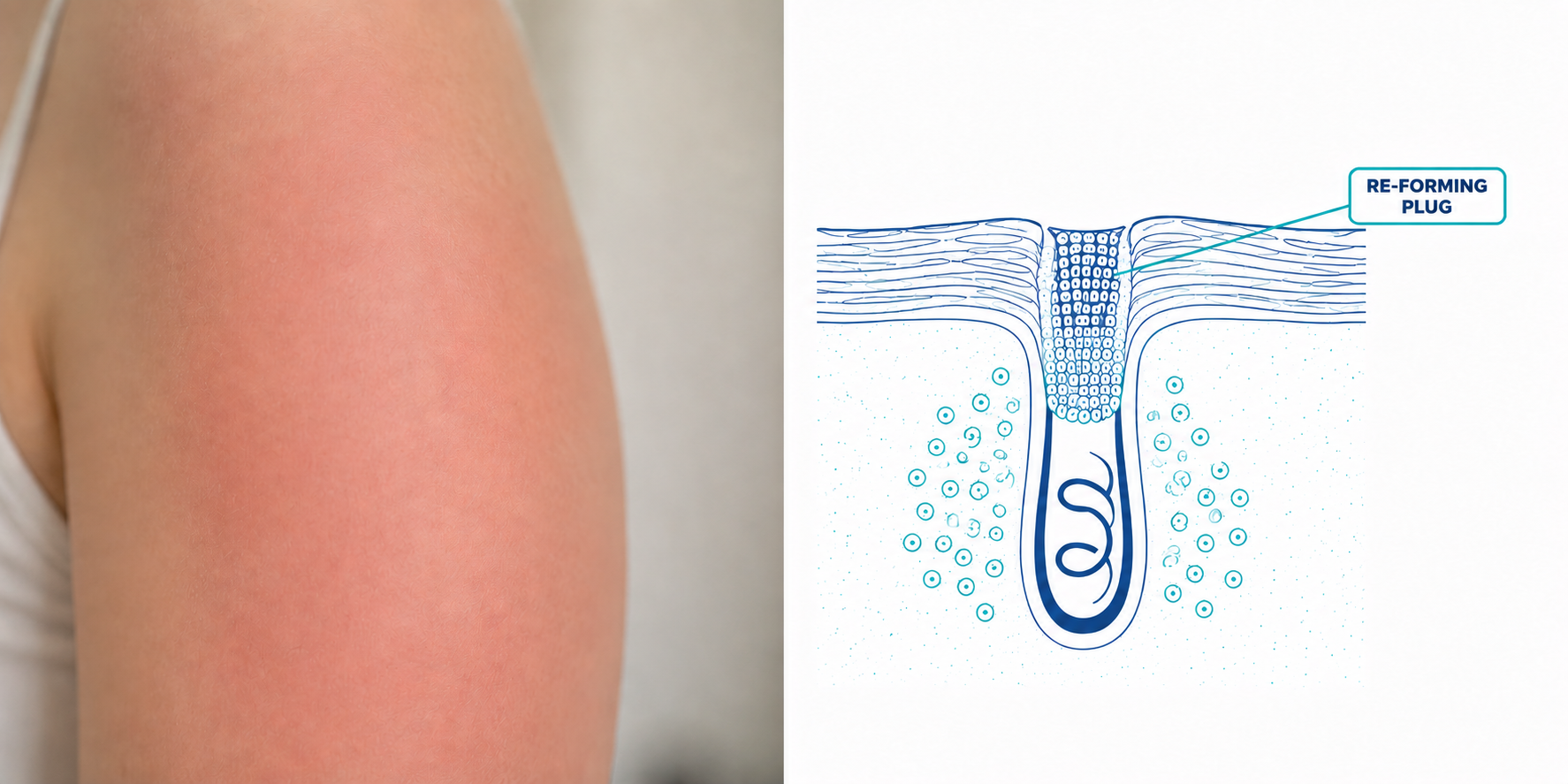
Layer three — the root cause: why it keeps coming back The follicle is not blocked by accident. In keratosis pilaris it over-produces keratin as a matter of programming — the tendency runs in families, it is commoner in people whose skin is short of the barrier protein filaggrin, and the sebaceous gland that should keep the follicle mouth lubricated is often shrunken or missing.3,4 A follicle built this way does two things. It refills the plug as fast as it is removed. And it inflames whenever it is disturbed, which is what the halo is: rub it, scrub it, shave over it, dry it out, and it reddens and re-plugs. A cosmetic cannot change the programming. It can stop provoking it — keep the follicle mouth dissolved open with a keratolytic that does not sting, keep the skin around it supple with the lipids it is short of, and leave the grit in the drawer. In the one comparative trial that used a plain barrier ointment as the control, the ointment alone improved the bumps almost as much as the prescription cream it was compared with.9
Split panel: close-up of reddish inflamed skin beside a cross-section diagram of a hair follicle with a callout to the re-forming keratin plug
Layer three — the root cause: a follicle that makes too much keratin and inflames whenever it is disturbed.

Independence statement

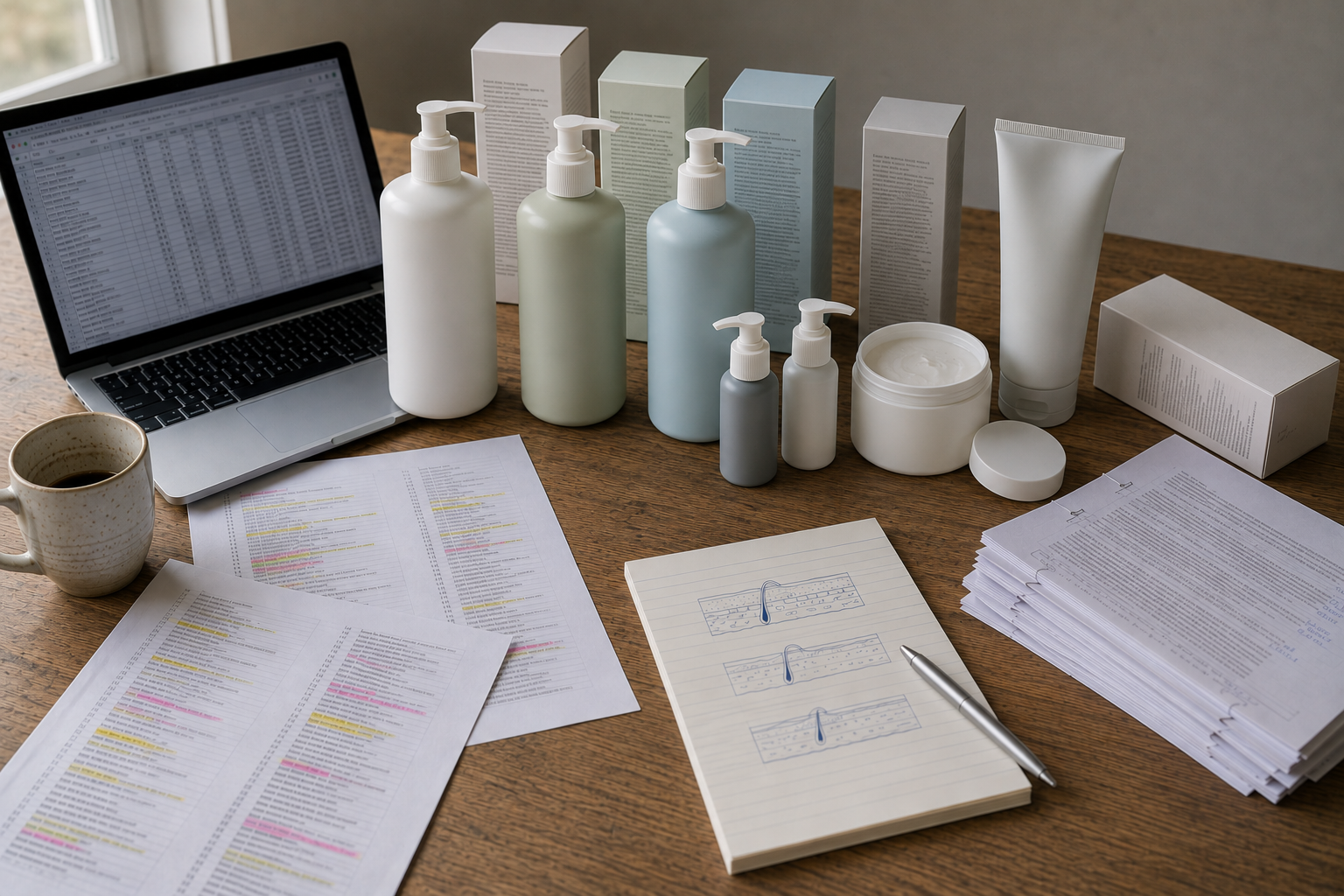
Audit desk: skincare tubs, pump bottles and jars arranged on a wooden table beside printed ingredient lists marked with highlighter, a notebook with hand-drawn follicle sketches and a laptop showing a spreadsheet
Not actual test data or record
This review was carried out independently by a cosmetic scientist LLM. Neither Dermatology Review nor its cosmetic scientist model has any connection to, or has received any payment, product, hospitality or other benefit from, any manufacturer or brand owner named on this page.

Test protocol

A computer monitor on a lab desk displaying a split-screen of a trial audit spreadsheet and an eight-week trial protocol document, with a notepad, mug, apothecary jars and sample folders in the foreground
Not actual test data or record
Carried out by an independent cosmetic science LLM. We set it out in full, step-by-step, so that you can judge it and so you can see what kind of each figure on this page is published data analysed by independent advanced modelling software. Step 1 — The audit In 2026 a modeller analysed the published data for 118 body treatments on sale in the UK sold for rough, bumpy or “chicken” skin: lotions, creams, milks, serums and scrubs, from high-street pharmacies, supermarkets, department stores, the specialist online retailers and the brands’ own sites. Face-only products, pharmacy medicines and prescription keratolytics were excluded. For products it recorded the full ingredient list, including declared percentage, the price per 100 grams, the on-pack claims, and the presence of fragrance, physical abrasives, drying alcohols and known irritants. Where a brand declares no percentage, the position of the active in the ingredient list was used to estimate its dose. Step 2 — The shortlist Seven products went through to full modelling. The finalists were chosen to represent every formulation approach in the audit — urea-and-salicylic cream, ammonium lactate lotion at a declared dose, ammonium lactate lotion at an undeclared dose, ten per cent urea lotion, five per cent urea milk, leave-on salicylic acid, and acid-plus-pumice scrub — and every price point, from £4.88 to £14.29 per 100 grams. Step 3 — The evidence map For actives in the seven finalists it identified the published human clinical trials at or near the declared concentration — 34 peer-reviewed papers, listed in the appendix — and extracted the effect sizes: the percentage reduction in bump count, the change in roughness, redness and hydration, and the time to effect. Where a manufacturer has published its own clinical or consumer study, it is logged as a brand claim and reported on this page as a brand claim. Step 4 — The user record It read the verified reviews of the seven finalists on retailer and brand sites and coded each one for four things: the speed of first result, stinging or redness, dryness and flaking, and whether the reviewer was still using the product after two months. What this means for how you read the page Findings below are a projection built from published evidence, not a measurement. Where it writes “is projected to” or “the evidence points to”, that is precisely what it means.

The key findings

Key Findings Finding 1 — Dissolve and rebuild, or it comes back A keratolytic on its own opens the follicle; it does not stop the skin around it drying back into the next plug. Rebuilding is not the finishing touch. It is half the job. Finding 2 Adults with these bumps have usually been trying for years, and the reviews show the pattern: the product that stings is stopped, the product that scrubs is stopped, and the product that is stopped has an effect of zero. The products that keep their users are the ones that are comfortable, unscented, and still visibly improving at week eight.21,31

The active ingredients

This is what the published evidence says about each.
Ingredient classDeclared dose / list positionLayerWhat the evidence supportsRefs
Ammonium lactate / lactic acid12% (AmLactin); undeclared, 2nd on the list (Ameliorate); low, 18th–29th (CeraVe); low, 21st (Eucerin)Two; three10% lactic acid cream cut bump count by 66% over 12 weeks in a randomised trial; 12% ammonium lactate is the reference treatment for rough, scaling skin; lactic acid raises the skin’s own ceramide production6, 10, 12, 13, 14, 15
Urea10%; 10%; 5%; undeclaredTwo (≥10%); three (any dose)Hydrating at any dose; keratolytic from about 10%; improves barrier and water-binding16, 17, 18, 27, 34
Salicylic acid and lipo-hydroxy acid2%; undeclaredTwoOil-soluble keratolytic; trialled for these bumps at 5%; capped at 0.5% in a body lotion and 2% in other leave-on products in GB and EU regulation6, 20, 30
Glycolic acid10% AHA declared (glycolic plus lactic)One (rinse-off)Loosens corneocyte bonds in leave-on use; consumer products recommended at ≤10% and pH ≥3.5; increases sun sensitivity; little contact time in a rinse-off10, 11, 21, 22, 31
Pumice (physical abrasive)UndeclaredOneRemoves the keratin cap mechanically; no trial in keratosis pilaris; mechanical disturbance is associated with the follicular inflammation the halo represents3
Ceramides, cholesterol and phytosphingosineUndeclared; after the preservativeThreePhysiological lipid mixtures repair the barrier; the skin around the follicle is barrier-deficient23, 33
NiacinamideUndeclaredThreeIncreases the skin’s own ceramide synthesis; reduces water loss24
Occlusives and emollients (shea butter, mineral oil, dimethicone, sweet almond oil)UndeclaredThreeSlow water loss; keep the skin around the follicle supple; a plain barrier ointment alone improved the bumps in a comparative trial9, 25
Glycerin and natural moisturising factors (sodium lactate, amino acids, sodium PCA, glyceryl glucoside)UndeclaredThreeRaise hydration; glycerin keeps the lipids between cells fluid; hydration improved in both arms of the keratosis pilaris trial6, 19, 26, 27
Soothing agents (bisabolol, allantoin, colloidal oat, feverfew, liquorice, chamomile, green tea)UndeclaredThree (comfort)Anti-inflammatory and anti-itch support at cosmetic doses28
Fragrance (parfum)PresentFlagThe commonest cause of contact allergy to a body product; unnecessary on inflamed follicles29
Lactic acid and ammonium lactate — the keratolytic Lactic acid loosens the bonds that hold the keratin plug together, and — at a working dose — it does something the other acids do not: it raises the skin’s own ceramide production and improves the barrier while it exfoliates.12,13 In the one randomised trial of these bumps that counted them, ten per cent lactic acid cream cut the count by two-thirds over twelve weeks, with hydration up and the improvement holding a month after stopping.6 Twelve per cent ammonium lactate has been the dermatologist’s reference lotion for rough, scaling skin since the 1980s.14,15 “The number is the whole story with this molecule,” says the independent cosmetic scientist model. Urea - hydration Urea is one of the skin’s own moisturising factors and, at low doses, one of the best humectants there is;18,27 from about ten per cent it becomes keratolytic, loosening the thickened stratum corneum around the follicle, and at twenty and above it is used clinically to strip hard skin.16,17,34 Urea does not sting the way the acids can, which is why the ten per cent products are often the gentlest. Salicylic acid — the right molecule Salicylic acid is the only common exfoliant that dissolves in oil, which is why it can follow the sebum into the mouth of a follicle rather than sit on top of it;20 the keratosis pilaris trial used it at five per cent.6 The GB and EU regulation caps salicylic acid at half a per cent in a body lotion and two per cent in other leave-on products.30 Glycolic acid Glycolic acid is a genuine keratolytic in leave-on use,10,11,22 and a ten per cent acid at the right pH is the ceiling the safety bodies recommend for a consumer product.31 Ceramides, niacinamide and the emollients — the other half of the job The skin between the bumps is dry and barrier-deficient, and a keratolytic that leaves it that way is opening a follicle that will close again. Ceramides, cholesterol and phytosphingosine rebuild the lipid mortar between the cells;23,33 niacinamide raises the skin’s own ceramide output;24 shea butter, mineral oil and dimethicone slow the water leaving;25 glycerin and the natural moisturising factors hold it in.26,27 Beyond cosmetics For bumps that do not respond to any of this, dermatologists use prescription keratolytics and retinoids, and laser treatment has randomised-trial evidence for the redness in particular.7,32 None of that is on this shelf, and none of it is cosmetic. A GP or dermatologist is the right next step if the products below have changed nothing. Mechanism claims are efficacy claims: each paragraph is limited to what the cited paper shows at the cited dose, and brand-published data are attributed to the brand. Keratosis pilaris is named descriptively throughout, as is normal practice in the category; the verbs stay cosmetic — smooth, soften, visibly reduce — never “treat”. Sample survey trade names belong to their owners and are used for identification.

Final Notes

If you have read this far, you have probably been scrubbing at this for years, and you have probably been told, in one way or another, that the problem is you. The problem is products built for the bump you can feel rather than the follicle underneath it. You now know the three layers, you know what a working dose looks like. That is more than most people have when they stand in the aisle. Use it. Whatever you choose, put the scrub down, give the tub eight weeks, wear sunscreen on your arms, and keep going.
Chloe Tan, Contributing Writer, Dermatology Review
Chloe Tan, Contributing Writer

Reference appendix

References — we go further than most cosmetic reviews and give you the published research the lab study model used on the ingredient combinations, and the published studies behind the top-ranked combination, so you can do your own research.

No.ReferenceSupports
1Poskitt L, Wilkinson JD. Natural history of keratosis pilaris. Br J Dermatol 1994; 130(6): 711–713.
2Hwang S, Schwartz RA. Keratosis pilaris: a common follicular hyperkeratosis. Cutis 2008; 82(3): 177–180.
3Wang JF, Orlow SJ. Keratosis pilaris and its subtypes: associations, new molecular and pharmacologic etiologies, and therapeutic options. Am J Clin Dermatol 2018; 19(5): 733–757.
4Gruber R, Sugarman JL, Crumrine D, et al. Sebaceous gland, hair shaft, and epidermal barrier abnormalities in keratosis pilaris with and without filaggrin deficiency. Am J Pathol 2015; 185(4): 1012–1021.
5Thomas M, Khopkar US. Keratosis pilaris revisited: is it more than just a follicular keratosis? Int J Trichology 2012; 4(4): 255–258.
6Kootiratrakarn T, Kampirapap K, Chunhasewee C. Epidermal permeability barrier in the treatment of keratosis pilaris. Dermatol Res Pract 2015; 2015: 205012.
7Maghfour J, Ly S, Haidari W, Taylor SL, Feldman SR. Treatment of keratosis pilaris and its variants: a systematic review. J Dermatolog Treat 2022; 33(3): 1231–1242.
8Novick NL. Practical management of widespread, atypical keratosis pilaris. J Am Acad Dermatol 1984; 11(2 Pt 1): 305–306.
9Breithaupt AD, Alio A, Friedlander SF. A comparative trial comparing the efficacy of tacrolimus 0.1% ointment with Aquaphor ointment for the treatment of keratosis pilaris. Pediatr Dermatol 2011; 28(4): 459–460.
10Van Scott EJ, Yu RJ. Hyperkeratinization, corneocyte cohesion, and alpha hydroxy acids. J Am Acad Dermatol 1984; 11(5 Pt 1): 867–879.
11Berardesca E, Distante F, Vignoli GP, Oresajo C, Green B. Alpha hydroxyacids modulate stratum corneum barrier function. Br J Dermatol 1997; 137(6): 934–938.
12Smith WP. Epidermal and dermal effects of topical lactic acid. J Am Acad Dermatol 1996; 35(3 Pt 1): 388–391.
13Rawlings AV, Davies A, Carlomusto M, et al. Effect of lactic acid isomers on keratinocyte ceramide synthesis, stratum corneum lipid levels and stratum corneum barrier function. Arch Dermatol Res 1996; 288(7): 383–390.
14Rogers RS 3rd, Callen J, Wehr R, Krochmal L. Comparative efficacy of 12% ammonium lactate lotion and 5% lactic acid lotion in the treatment of moderate to severe xerosis. J Am Acad Dermatol 1989; 21(4 Pt 1): 714–716.
15Wehr R, Krochmal L, Bagatell F, Ragsdale W. A controlled two-center study of lactate 12 percent lotion and a petrolatum-based creme in patients with xerosis. Cutis 1986; 37(3): 205–207, 209.
16Celleno L. Topical urea in skincare: a review. Dermatol Ther 2018; 31(6): e12690.
17Pan M, Heinecke G, Bernardo S, Tsui C, Levitt J. Urea: a comprehensive review of the clinical literature. Dermatol Online J 2013; 19(11): 20392.
18Lodén M. Urea-containing moisturizers influence barrier properties of normal skin. Arch Dermatol Res 1996; 288(2): 103–107.
19Weber TM, Kausch M, Rippke F, Schoelermann AM, Filbry AW. Treatment of xerosis with a topical formulation containing glyceryl glucoside, natural moisturizing factors, and ceramide. J Clin Aesthet Dermatol 2012; 5(8): 29–39.
20Arif T. Salicylic acid as a peeling agent: a comprehensive review. Clin Cosmet Investig Dermatol 2015; 8: 455–461.
21Kaidbey K, Sutherland B, Bennett P, et al. Topical glycolic acid enhances photodamage by ultraviolet light. Photodermatol Photoimmunol Photomed 2003; 19(1): 21–27.
22Ditre CM, Griffin TD, Murphy GF, et al. Effects of alpha-hydroxy acids on photoaged skin: a pilot clinical, histologic, and ultrastructural study. J Am Acad Dermatol 1996; 34(2 Pt 1): 187–195.
23Man MQ, Feingold KR, Thornfeldt CR, Elias PM. Optimization of physiological lipid mixtures for barrier repair. J Invest Dermatol 1996; 106(5): 1096–1101.
24Tanno O, Ota Y, Kitamura N, Katsube T, Inoue S. Nicotinamide increases biosynthesis of ceramides as well as other stratum corneum lipids to improve the epidermal permeability barrier. Br J Dermatol 2000; 143(3): 524–531.
25Ghadially R, Halkier-Sorensen L, Elias PM. Effects of petrolatum on stratum corneum structure and function. J Am Acad Dermatol 1992; 26(3 Pt 2): 387–396.
26Fluhr JW, Darlenski R, Surber C. Glycerol and the skin: holistic approach to its origin and functions. Br J Dermatol 2008; 159(1): 23–34.
27Lodén M, Andersson AC, Anderson C, et al. A double-blind study comparing the effect of glycerin and urea on dry, eczematous skin in atopic patients. Acta Derm Venereol 2002; 82(1): 45–47.
28Reynertson KA, Garay M, Nebus J, et al. Anti-inflammatory activities of colloidal oatmeal (Avena sativa) contribute to the effectiveness of oats in treatment of itch associated with dry, irritated skin. J Drugs Dermatol 2015; 14(1): 43–48.
29de Groot AC. Fragrances: contact allergy and other adverse effects. Dermatitis 2020; 31(1): 13–35.
30Commission Regulation (EU) 2019/698 amending Annex III to Regulation (EC) 1223/2009, entry 98 (salicylic acid: maximum 0.5 per cent in body lotions and 2 per cent in other leave-on products); retained in Great Britain under the UK Cosmetics Regulation.
31Cosmetic Ingredient Review Expert Panel. Final report on the safety assessment of glycolic acid, ammonium, calcium, potassium and sodium glycolates, methyl, ethyl, propyl and butyl glycolates, and lactic acid, ammonium, calcium, potassium, sodium and TEA-lactates, methyl, ethyl, isopropyl and butyl lactates, and lauryl, myristyl and cetyl lactates. Int J Toxicol 1998; 17(Suppl 1): 1–241.
32Ibrahim O, Khan M, Bolotin D, et al. Treatment of keratosis pilaris with 810-nm diode laser: a randomized clinical trial. JAMA Dermatol 2015; 151(2): 187–191.
33Elias PM. Stratum corneum defensive functions: an integrated view. J Invest Dermatol 2005; 125(2): 183–200.
34Piquero-Casals J, Morgado-Carrasco D, Granger C, Trullàs C, Jesús-Silva A, Krutmann J. Urea in dermatology: a review of its emollient, moisturizing, keratolytic, skin barrier enhancing and antimicrobial properties. Dermatol Ther (Heidelb) 2021; 11(6): 1905–1915.

© 2026 Dermatology Review · SN: DR-2026-001

Dermatology Review

Health & Beauty Reviews

© 2026 Dermatology Review · SN: DR-2026-001

© Dermatology Review 2026. All brand names, product names, logos and trademarks appearing on this page remain the property of their respective owners and are used solely to identify the products under review. No endorsement of Dermatology Review by any brand, and no affiliation with any brand, is implied.

Disclaimer and Limitation of Liability

1. No medical or professional advice. Nothing on this website constitutes medical, dermatological, pharmaceutical or other professional advice, nor a diagnosis or recommendation of treatment for any skin condition. Skin conditions vary between individuals. You should consult a doctor, dermatologist or pharmacist before using any product, particularly if you have a diagnosed condition, are pregnant or breastfeeding, have known allergies or sensitivities, or are using prescribed medication. Never disregard or delay seeking professional advice because of something you have read on this website.

2. Accuracy and completeness. We make reasonable efforts to keep content current and to state our sources. However, ingredient lists, formulations, prices, availability and brand claims change without notice, and published research may be revised or superseded. We give no warranty, express or implied, that any content is accurate, complete, current or free from error or omission. Content may have been drawn from third-party sources that we do not control and cannot independently verify.

3. Opinion and fair comment. Reviews, rankings and comparative statements on this website are expressions of the honest opinion of the cosmetic scientist model, based on the facts and methodology stated on each page. They are not statements of fact about the quality, safety or efficacy of any product, and are not intended to disparage any brand, manufacturer, retailer or individual. Where a product ranks below others, this reflects the output of the stated methodology and not any allegation that the product is defective, unsafe, mis-sold or unlawful. Any brand that considers a statement inaccurate may contact us.

4. Third-party content and links. This website may contain links to, or reproduce claims from, third-party websites, publications and retailers. We do not endorse, control or accept responsibility for the content, accuracy or availability of any third-party material, nor for any products purchased through third-party links.

5. Nature of the content. All reviews, rankings, scores, figures, category analyses and some images published on Dermatology Review are generated by an artificial intelligence large language model (the “cosmetic scientist/science model”) and represent the output and opinion of that model only. The model is commissioned by an independent third party. Dermatology Review has no control over the model. The model forms its opinion by applying a fixed, published methodology to publicly available information, namely published ingredient lists (INCI), peer-reviewed trial data on individual ingredients, brand-published claims and coded consumer reviews. The content does not represent the views, findings, recommendations or opinions of Dermatology Review, its owners, editors or any named individual. Dermatology Review’s role is limited to making the model’s output publicly available for general information purposes. No product featured on this website has been laboratory-tested, clinically tested, handled or used by the publication or the model. All performance figures, scores, percentages and rankings are modelled projections derived from the stated methodology. They are not measurements, test results, statements of fact or guarantees of how any product will perform on any individual, and no person should rely on them as such.

6. Limitation of liability. To the fullest extent permitted by law, Dermatology Review, its owners, directors, employees, contributors and affiliates exclude all liability for any loss, damage, cost or expense of any kind, whether direct, indirect, consequential or otherwise, arising out of or in connection with the use of this website or reliance on any content published on it, including without limitation any inaccuracy, error or omission, any decision to purchase or use any product, any adverse skin reaction, and any loss of profit, revenue, business or goodwill suffered by any brand, manufacturer or retailer. Nothing in this disclaimer excludes or limits liability that cannot lawfully be excluded or limited.

7. Indemnity. By using this website you agree that you do so at your own risk and that you will not bring any claim for compensation against the publisher or its owners in respect of any matter for which liability has been excluded above.

8. Changes. We may amend this disclaimer at any time. Continued use of the website after any change constitutes acceptance of the amended terms.